

An Ongoing In-House Agenda
In the past decade, Asia Business Law Journal has featured the initiatives, activities and achievements of in-house counsel associations across the region, documenting the changing role and growing influence of the profession. That coverage has provided more than visibility: it has helped connect local communities with a wider regional audience, writes Sheryl Ubana.
In-house counsel associations across Asia-Pacific have grown alongside the profession, building stronger communities and giving corporate lawyers a bigger voice in business.
In the past decade, the in-house legal profession has become more connected, more visible and more closely integrated with business. In tandem, associations supporting corporate counsel have evolved alongside, expanding their networks, deepening member engagement and creating new platforms for professional development and collaboration.
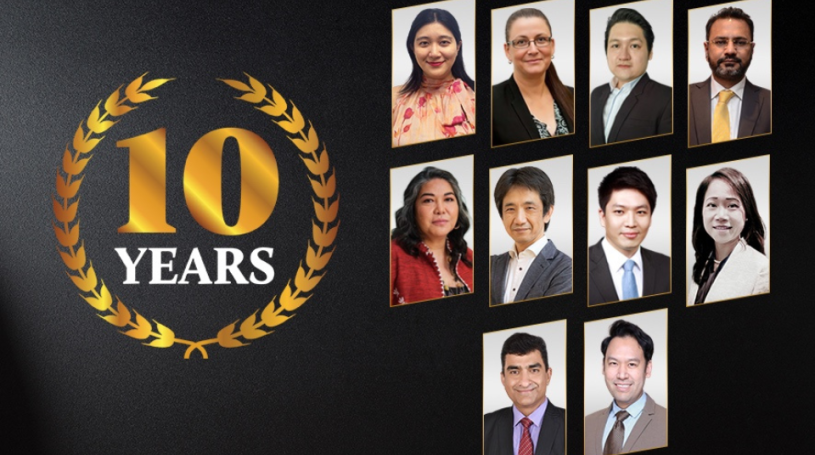
For Asia Business Law Journal’s 10th anniversary, presidents and leaders of in-house counsel associations across the Asia-Pacific reflect on how their communities have developed over the years and how the role of corporate counsel is changing.
Bigger Communities
Across the region, associations have expanded their membership bases while building stronger networks that connect corporate counsel across industries, jurisdictions and levels of experience.
In Japan, the Japan In-House Lawyers Association (JILA) has grown to more than 2,000 members with a broad presence in society.
“Over the past decade, JILA has transformed from an internal mutual-aid association into an indispensable institution with a real societal presence,” says association president Satoshi Shinkuma, based in Tokyo.
The Association of Corporate Counsel (ACC) Asia-Pacific, with about 1,500 active members, has also seen similar significant growth in its local chapters and member communities across the region.
“ACC’s presence across the Asia-Pacific region has grown significantly over the past decade, reflecting the increasing sophistication, influence and strategic importance of the in-house legal profession,” says Julie Sawyer, director of APAC membership and member services at ACC in Brisbane.
She says the community has created opportunities for members to connect, share practical insights and address common challenges in their local markets while remaining part of a global network.
In India, the Federation of Indian Corporate Lawyers (FICL) was incorporated in 2020, at the height of the covid-19 pandemic. “It was an odd time to launch a new professional body, but in hindsight, it was exactly when one was needed,” says FICL director Rohan Sharma. Six years on, FICL has grown to more than 2,300 in-house lawyers across India.
In the Philippines, the Legal Management Council of the Philippines (LMCP) recently marked its 60th anniversary, making it the oldest in-house counsel association in Asia. President Alicia Salita says the association has also evolved with a more diverse membership base, reflecting the growing number of companies investing in and focusing on in-house legal teams. “Diversity in membership is very apparent. We tended to have more concentration in certain areas or industries because there were fewer companies investing and focusing on having in-house counsel,” says Salita.
At the Japan In-house Counsel Network (JICN), growth has been about more than numbers. It has been about building a community that bridges industries, jurisdictions and generations.
“The continued growth of JICN and the strong engagement of our members remain among the milestones of which we are most proud,” says JICN co-president Angela Yuen.
Deeper Connections
As their networks have grown, associations have also expanded how they engage with members and the wider legal community.
In Thailand, community-building has been particularly important for the relatively young Thai Corporate Counsel Association (THAI-CCA), which was established in 2023 as Thailand’s first formal professional association created by and for in-house corporate lawyers, and becoming the seventh country member of the Asia Pacific Corporate Counsel Alliance (APCCA).
“Since its establishment, THAI-CCA has evolved from its initial focus on creating a platform for in-house counsel to connect and exchange experiences into a broader professional community supporting the development, recognition and collaboration of in-house lawyers in Thailand,” says THAI- CCA president Visitsak Arunsuratpakdee.
He says the association has sought to create a platform open to in-house counsel across all levels of seniority and industries. “It allows experience to be shared with the next generation, while also giving younger lawyers an opportunity to contribute ideas, take responsibility and help shape the future direction of the association.”
The association’s approach brings experienced general counsel together with younger lawyers who participate as members, volunteers and contributors. The aim is not simply to expand membership, but to create a community in which experience can be shared while younger practitioners have an opportunity to shape the association’s future.
In Hong Kong, the Association of Corporate Counsel Hong Kong (ACCHK) has strengthened member engagement through a WhatsApp group where members exchange views and recommendations and receive reminders about events.
Since introducing a sponsorship model in 2024, the association has also taken a more hands-on approach to learning sessions, using member polls to identify topics of interest and shape programmes around their needs.
Its engagement extends beyond its membership. “We are also gaining traction with other legal organisations such as the Department of Justice, International Organisation for Mediation and the Hong Kong International Arbitration Centre in being a supporting organisation or hosting events or visits together,” says ACCHK president Winnie Tse.
As these communities have grown so, too, have opportunities to connect and collaborate beyond national borders.
The Korean In-house Counsel Association (KICA) has established bilateral exchange frameworks with organisations and firms across Japan, Indonesia, China and India, as well as co-operation channels with international organisations including the International Bar Association.
The Singapore Corporate Counsel Association (SCCA), now in its 24th year, has taken regional collaboration on a larger scale through its APAC Legal Congress. Its latest congress, held in Singapore in April 2026, attracted more than 2,500 registrants from 30 countries.
The SCCA today is “very different from where we were a decade ago”, says SCCA president Daniel Choo. “As we reflect on how far we have come and look towards the next chapter, our mission remains firmly anchored in building better counsel, better corporations and a better community.”
Six years after its incorporation, FICL has also grown beyond its local network. “We’ve also built a presence on the global stage, with affiliations through In-house Counsel Worldwide, the Asia Pacific Corporate Counsel Alliance, and the African Corporate and Government Counsel Forum,” says Sharma.
Counsel at the Table
The changing role of corporate lawyers is perhaps the most significant development reflected in the associations’ experiences.
The modern in-house lawyer is increasingly expected to operate beyond traditional boundaries of legal advice. Corporate counsel are taking on broader responsibilities as strategic business partners, risk managers, compliance leaders and drivers of corporate transformation.
JILA’s Shinkuma says this shift is one of the association’s most important achievements of the past decade, “shifting the role of corporate lawyers from mere legal checkers to strategic business partners within executive decision making”.
ACC APAC’s Sawyer points to the increasing strategic importance of legal departments. “As organisations across the region have navigated rapid economic growth, regulatory change, technological transformation and geopolitical uncertainty, ACC has expanded its role from a professional association focused primarily on networking and education to a trusted partner supporting the broader professional development and success of in-house counsel,” says Sawyer.
JICN’s Yuen agrees: “Today’s legal leaders are expected not only to provide legal advice, but also to serve as strategic business partners, risk managers, compliance leaders, and drivers of corporate transformation.”
The shift towards a more strategic role is also prompting associations to advocate for greater recognition of in-house counsel within the wider legal system.
In India, the General Counsel Association of India (GCAI) was established during the pandemic in part to address what its co-founder and general secretary, Akhil Prasad, describes as a lack of legal recognition for general counsel and in-house lawyers.
“We just started the concept in 2021, and this was during the peak of covid, because we thought that something was missing,” says Prasad.
He says corporate counsel handle a broad range of complex matters – from M&A and corporate law to employment issues – yet their experience and communications with employers are not afforded the same recognition and legal privilege as those of practising lawyers.
For the GCAI, elevating the role of in-house counsel extends beyond giving them a stronger voice within the boardroom. It also means securing recognition of the profession within the legal framework itself.
“Ultimately, SCCA’s journey reflects the transformation of the in-house profession itself; from legal advisers to strategic partners and business leaders,” says Choo.
The in-house profession has come a long way in a decade, and its evolution is far from over. As corporate counsel take on greater influence, the associations supporting them have an increasingly important role in connecting, developing and advancing the profession across Asia-Pacific.