

Legal Counsel as an Architect of Social Value in Infrastructure: An Interview with Jeremy Saw
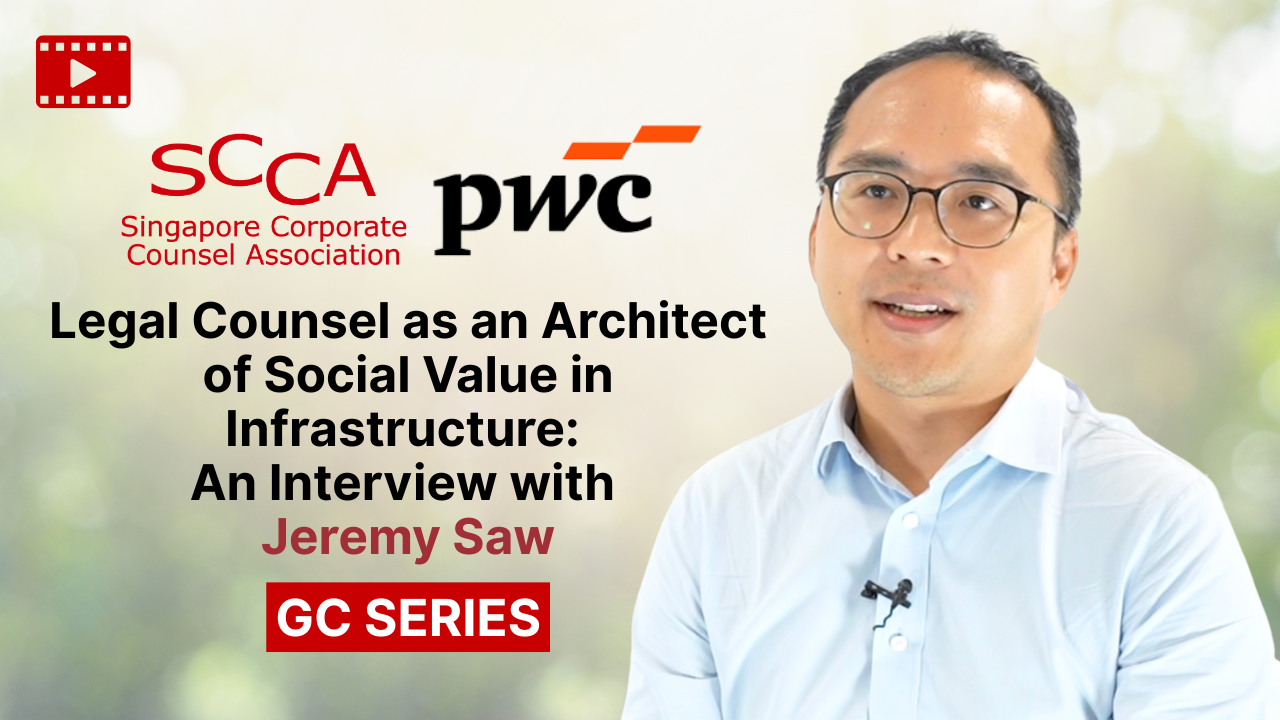
In the fast-evolving landscape of sustainable infrastructure and energy transition, Jeremy Saw, Director for Legal & Compliance at SUSI Partners (Singapore) and Co-Lead of the SCCA ESG Chapter, exemplifies the modern legal leader who sees beyond compliance to long-term value, resilience, and social impact. As a commercially minded counsel working at the intersection of investment, development, and governance across Southeast Asia’s energy transition, Jeremy blends legal precision with an eye for human-centricity. His experience spans the full lifecycle of infrastructure projects, from planning to financing to long-term operations, placing him at the centre of strategy, stakeholder management, and sustainability.
From Transactional Counsel to Steward of Impact
Jeremy views regional infrastructure and energy projects as multi-year journeys requiring sustained partnership across disciplines, jurisdictions, and communities.
“These are often multi-year journeys from start to finish, with multiple aspects interrelating and affecting outcomes,” he says. “With great power comes great responsibility.”
For Jeremy, legal counsels are uniquely placed to influence design, set governance guardrails, and track outcomes throughout the project’s life. The value of legal work is not only in mitigating risk but also in shaping decisions so that contracts, financing, and operational practices embed social and environmental considerations from the outset. This is not an add-on, but core to how robust and viable projects are built in the real world. In this light, the task of the lawyer is aligning commercial imperatives with social and environmental responsibility.
Bridging Profit and Purpose
Jeremy resists the framing of commercial versus impact as a trade-off. “To me these are one and the same,” he says. In energy and infrastructure, he explains, they are inseparable. “Energy is both an input and an output that is used by, and benefits, all.”
A project’s social and environmental license to operate is a foundational asset, not a public relations consideration. From local community support to mitigations around any environmental impacts, these shape feasibility, financing, and long-term performance. When neglected, they can quickly become political flashpoints. Experienced investors and developers therefore need to adopt a “whole-of-project” view, integrating social and environmental responsibilities into commercial decisions so that sustainability and economics reinforce one another.
Lawyers have a strategic role to play to bridge the social and environmental responsibilities with commercial decisions.
Building Cross-Functional Capabilities for Energy Transition
As Southeast Asia accelerates its energy transition alongside a “whole-of-project” view, Jeremy emphasises the importance of multidisciplinary alignment. He highlights the benefits of working within multidisciplinary teams capable of holding both a holistic and granular view of project and platform development.
“A team that can see across opportunities and risks, is crucial,” he explains.
Investment, legal, and ESG functions are most effective when they move in step: identifying risk and opportunity early, calibrating standards and aligning with like-minded co-venturers and investors.
Start with Listening: Stakeholder and Community Engagement
If there is one operational principle that runs through Jeremy’s approach, it is early, specific, and thoughtful engagement. “Each project is different, which means each relevant community and stakeholder is different,” he says. “Engagement needs to be nuanced and sensitive.”
Each requires careful baselining and consultation: understanding ecological features and seasonality, mapping direct and indirect impacts, and identifying who is affected and how.
“Pay significant attention early to your environmental and social baselines,” he adds. “What flora and fauna are affected? Does seasonality matter? Who are the local communities, and how are they impacted?”
Legal’s Strategic Role and The Qualities That Matter
Legal teams are often perceived as the final checkpoint. Jeremy posits the opposite. “Legal counsel have an important influencing, design, governance, and outcome-tracking role,” he says. Legal should be engaged at the onset, where lawyers can influence project design, contracts, and governance structures that integrate ESG factors in ways that are measurable, enforceable, and adaptable over time.
Beyond taking on a strategic role, Jeremy also highlights several attributes that distinguish effective legal advisors. For instance, curiosity and appreciation of multidisciplinary experts enables in-house counsels to understand the diverse facets, priorities, and perspectives across the many disciplines and stakeholders required to make a project successful.
“Alignment can take time, with many iterative workarounds before an adequate solution is reached,” he says. “So patience, pragmatism, and an eye on the end goal is crucial.”
A willingness to engage with the human dimension of the project is critical, too, as infrastructure planning inherently interacts with real communities and environments.
A Human Endeavour with Lasting Impact
For Jeremy, the most rewarding moments arrive when projects are in operation and the benefits are visible on the ground. “I still get a buzz seeing a successful project come to fruition,” he shares. “Those environmental and social measures we spent time building in are now implemented and working.”
Site visits, conversations with community members, and seeing projects functioning as intended bring the work full circle.
“Going on site and speaking with the same people we engaged early on, now working with or benefiting from the project, brings the human impact to life,” he reflects.
Behind the assessments and contracts are human stories— jobs created, services improved, ecosystems protected, and communities engaged. Legal counsel are not merely gatekeepers; at their best, they are architects of outcomes that endure.
 | The GC Series, presented by PwC NewLaw (Singapore) in collaboration with SCCA, serves as a distinguished platform that captures and shares the perspectives of accomplished General Counsels (GCs) across industries. |