
Government partners with industry to roll out AI training to strengthen corporate lawyers’ regional competitiveness
To support the professional transformation of corporate lawyers, the Ministry of Law, the Infocomm Media Development Authority (IMDA), and the Singapore Corporate Counsel Association (SCCA) have jointly launched the “AI Fluency Programme”. The initiative aims to help legal professionals navigate complex emerging technologies by moving them beyond theoretical understanding towards practical, hands-on capabilities.
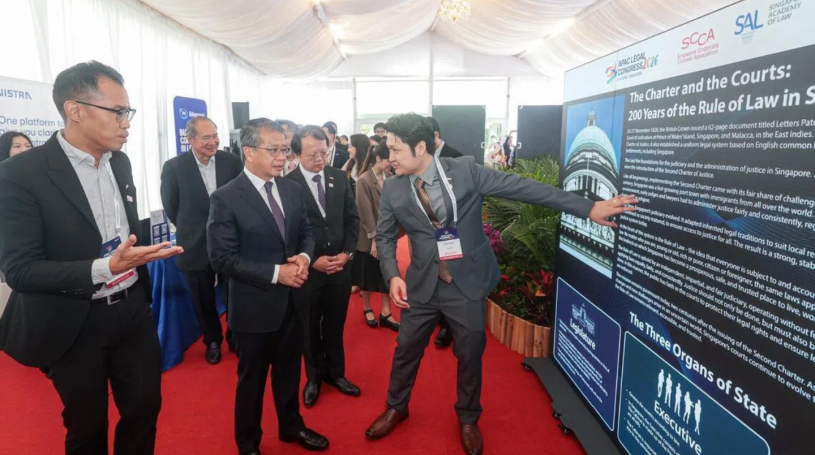
At the fourth Asia-Pacific Legal Congress organised by the SCCA on Wednesday (Apr 8), Minister for Law and Second Minister for Home Affairs Edwin Tong said the government will further strengthen the professional development of corporate lawyers, helping them manage the complexities of the Asia-Pacific market and build a more connected and active regional community of in-house counsel in Singapore and beyond.
He noted that the number of corporate lawyers has grown by 33 per cent over the past decade, reaching 4,800, adding that “the entry and investment of multinational companies cannot be separated from the contributions of corporate lawyers”.
He stressed that in an increasingly volatile environment, corporate lawyers must take on three major challenges and transform their core roles.
First, they must become “architects” involved at the earliest stages of decision-making, rather than “legal gatekeepers” who only intervene after the fact. Strong organisations require lawyers to participate at the beginning of business discussions, providing legal insight and helping shape the issues, as the traditional model of merely reviewing outcomes is rapidly becoming outdated.
Second, they must become “strategists” in emerging technologies such as artificial intelligence, rather than compliance officers alone. Lawyers should proactively consider how law can support corporate strategy. In particular, in areas such as AI, they need to navigate fragmented regulations such as the EU AI Act and Singapore’s AI governance framework, and build cross-jurisdictional governance structures, rather than simply focusing on reactive legal defence.
Third, they must uphold professional integrity and serve as the “conscience” of the organisation. The minister stressed that while AI can speed up work, it does not necessarily make people wiser, nor does it improve judgment or integrity. Lawyers must be willing to ask difficult questions even under commercial pressure and remain committed to ethical principles.
The SCCA, which has around 700 members, saw its president Daniel Choo say in his speech that the value of corporate lawyers should not be diluted by technology, and that professional communities are essential in collectively addressing these challenges. He announced three key initiatives to further empower the in-house legal community.
First, the association will introduce a free membership tier for all corporate lawyers in Singapore, complementing existing general membership, to provide wider access to networking, exchange, and learning opportunities.
Second, SCCA is developing the first regional certification programme for corporate lawyers in Asia-Pacific, aimed at recognising professional excellence and continuous development, and establishing a regional benchmark.
Third, a partnership between the National Trades Union Congress (NTUC) and SCCA will leverage NTUC resources to help local corporate lawyers upgrade their skills and stay competitive in a rapidly evolving environment.
The two-day Asia-Pacific Legal Congress has attracted over 2,000 corporate lawyers and legal professionals, who are discussing generative artificial intelligence, including how in-house lawyers can continue to create core value for businesses in a landscape where AI can already perform basic legal tasks at lower cost.